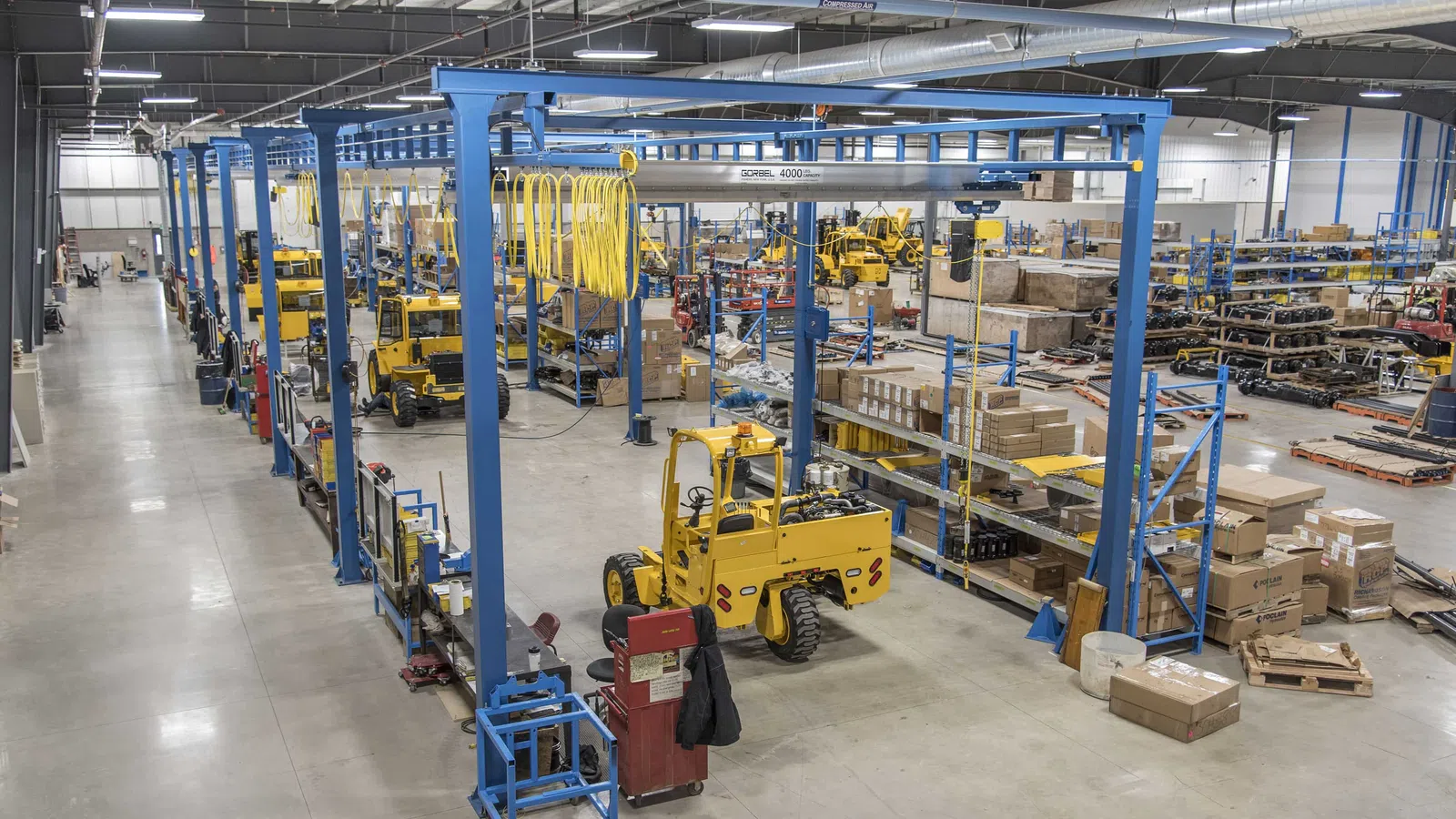
Overhead and Jib Crane Installation in Atlanta, GA
Building Steel Checked First.
Get Your Crane Installed
What We Install
Fit

Workstation Bridge Cranes

Free Standing Jib Cranes

Gantry Cranes

Overhead Bridge Cranes

Cleveland Tramrail
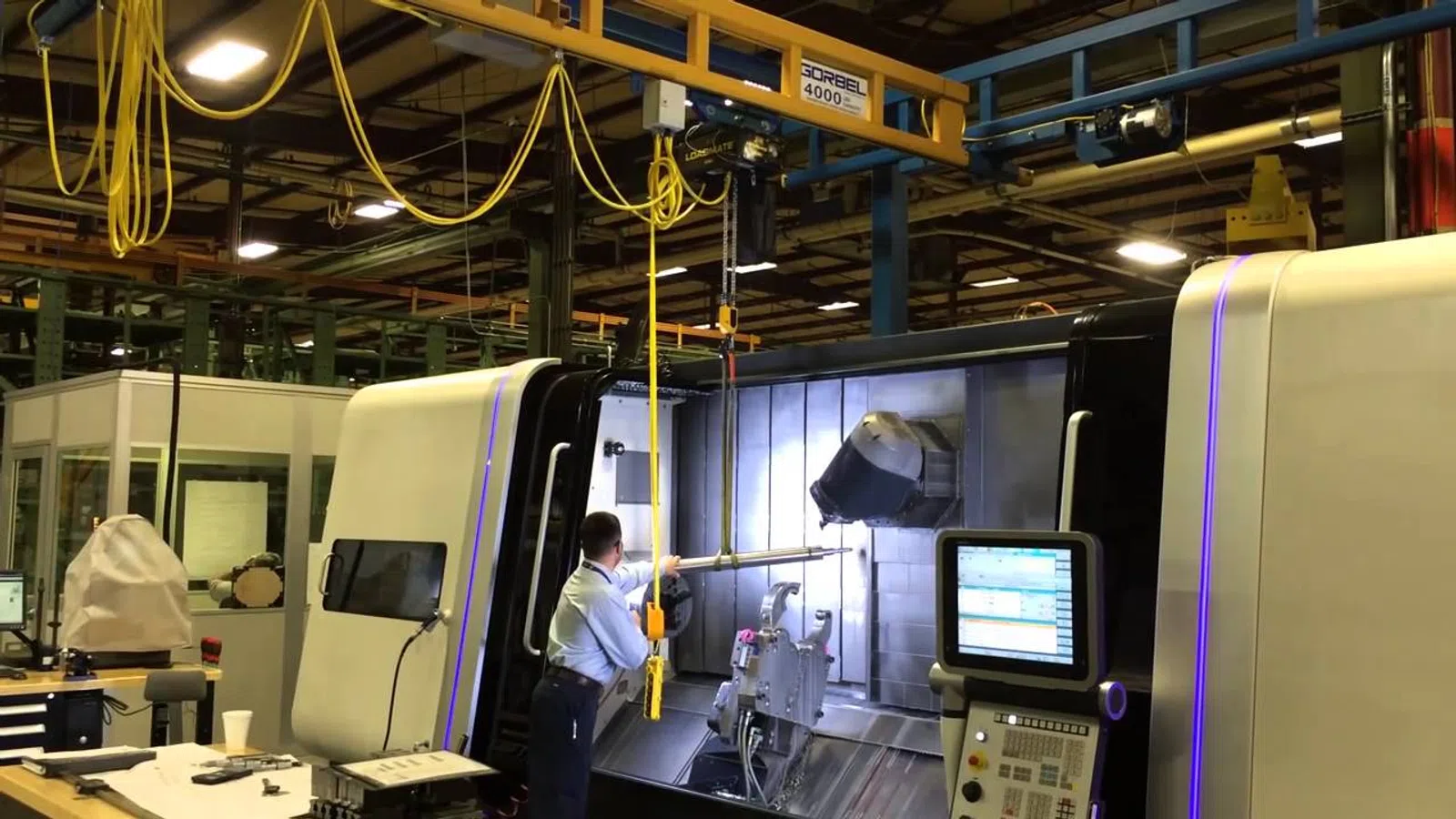
The Building Comes First
Before steel arrives
A crane puts load into whatever holds it up. Before anything is ordered we confirm three things:
- The structure. Roof steel for ceiling-hung systems, columns and runway supports for bridge cranes. When the building will not carry it, the answer is a free-standing structure, and the proposal says so.
- The slab. Free-standing jibs and workstation cranes put concentrated loads into the floor. We check thickness and condition, and design a footing where the slab is not enough.
- The clearances. Hook height, headroom and hook approach against what is really in the bay: lights, sprinkler mains, ductwork and the machines the crane has to reach.
How Long Production Stops
Downtime
Usually not long. From the jobs below: a two-ton free-standing workstation crane installed in one working day; an assembly-line crane system installed in under five days; a welding station crane in one day, with its curtain in two more. Most of the time goes into drawings and fabrication, not into your building.
Frequently Asked Questions
FAQs
Do I need a permit for a crane?
The crane itself usually does not trigger a building permit, but the structure supporting it, new foundations and electrical work often do. We confirm what your jurisdiction requires.
What inspections does a new crane need?
OSHA 29 CFR 1910.179 requires inspection and testing of overhead cranes before first use and at intervals after. We set up the ongoing inspections as part of inspection and service.
Can you move an existing crane?
Yes. See relocation and reconfiguration.
Send Us the Load and the Bay
Start a project
What you lift, how far it travels, your clear height and a photo of the bay.