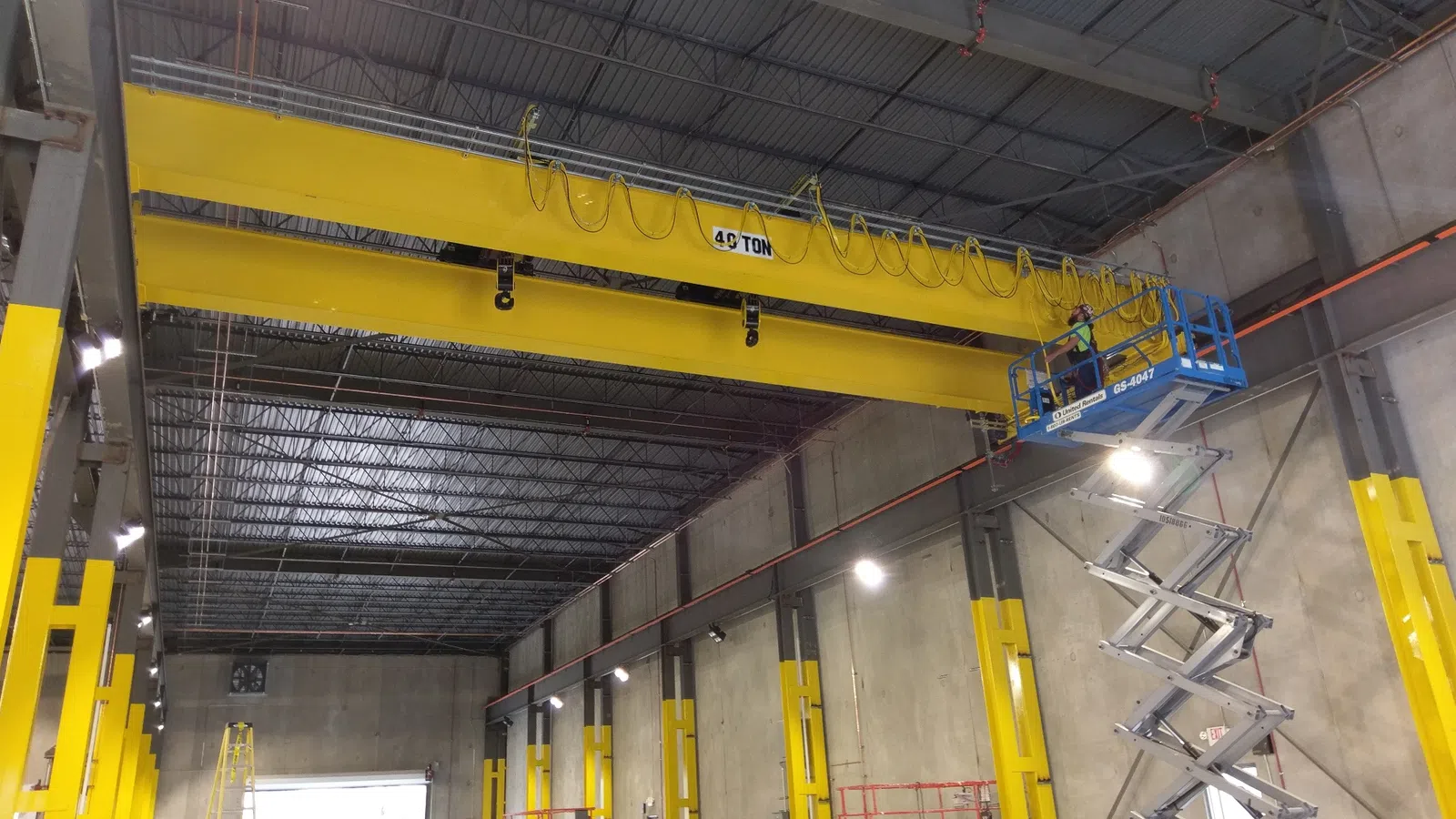
Overhead Crane Systems in Atlanta, GA
Heavy Lifts, Whole-Bay Coverage.
Plan Your Overhead Crane
Choosing a Crane Configuration
Overview
At Power and Motion, we design, quote, and support complete overhead crane packages built on proven technology from R&M Materials Handling.
Whether the application calls for a single-girder crane for general manufacturing, a double-girder system for heavy process duty, or an explosion-protected hoist for hazardous environments, the right system depends on capacity, span, lift height, duty cycle, and operating environment.
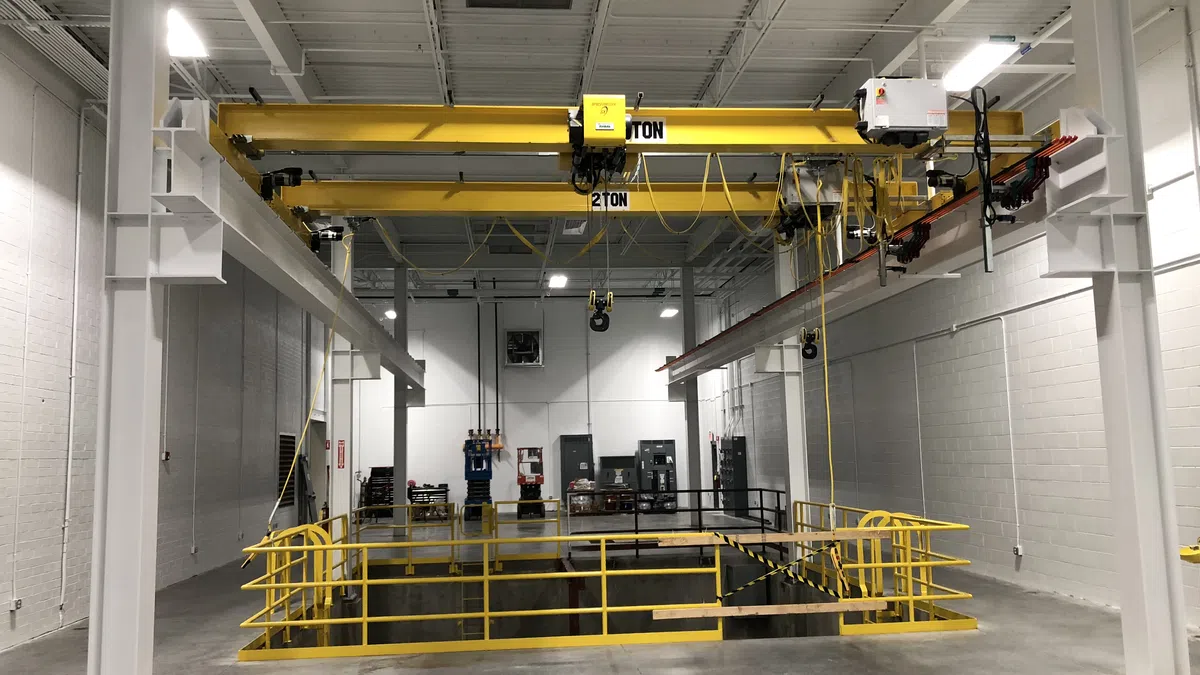
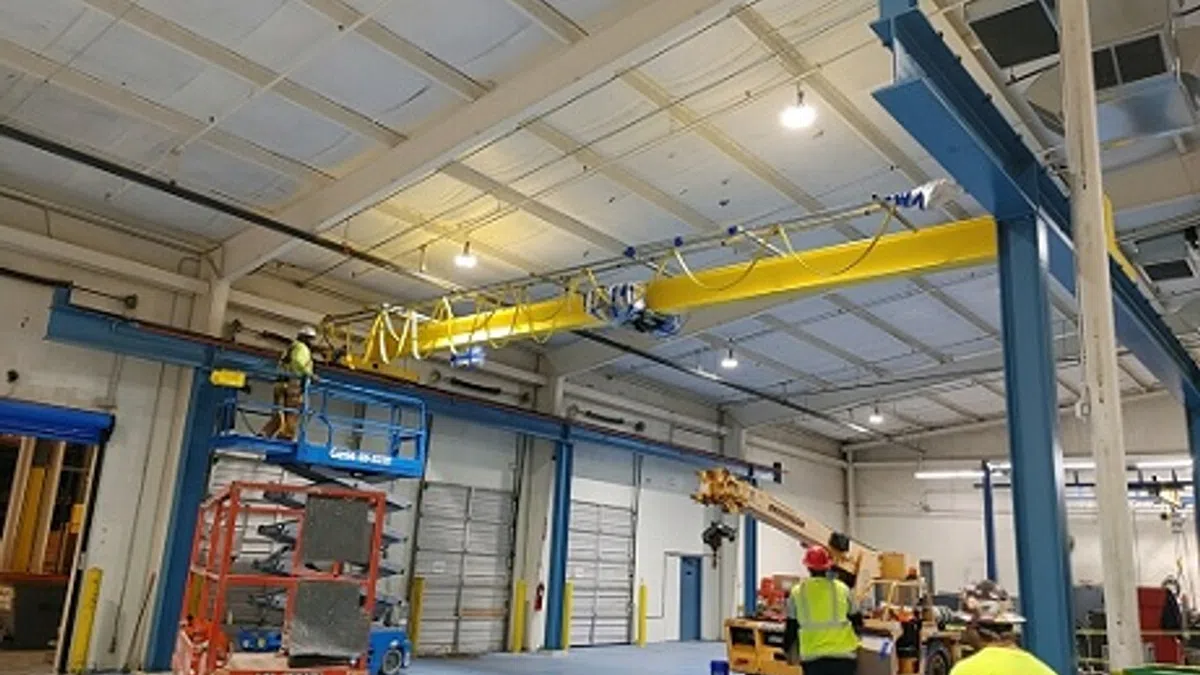
Four Systems, and Which Covers Your Shape
Bridge cranes cover a rectangle, monorails a line, jibs a circle, and patented track a path between all three.
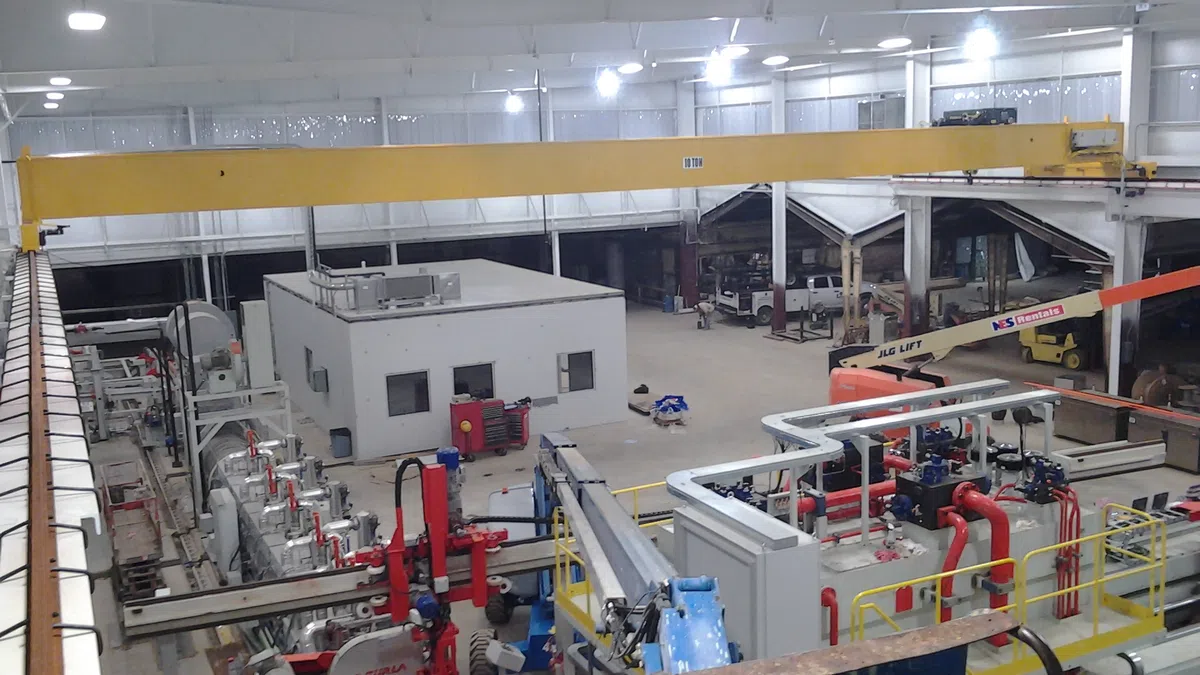
Bays We Are Called Into Most
Applications
Fabrication, machine shops, assembly, maintenance bays and process plant.
Work Out Which System You Need
Configuration tool
Enter the capacity, the shape of the coverage and the clear height. The tool returns the system type, the duty class and what has to be reviewed in the building.
What Your Building Will Actually Allow
Design considerations
The load is rarely the binding constraint. These four are what the design actually turns on.
Capacity
The heaviest load plus the weight of the lifting device. Below-the-hook attachments, spreader beams, magnets and slings all count against rated capacity. Build in margin for the loads you expect in five years.
Span and runway length
Span is center to center between runway rails. Runway length is how far along the building the hook travels. Set both from the work you want covered, not from convenient column lines alone.
Headroom and hook height
Available lift is floor to underside of girder, minus hoist headroom, minus the height of your lifting device. This is where low headroom hoist designs earn their keep in existing buildings.
Hook approach
End and side approach determine how close the hook gets to walls and runway ends. Poor approach dimensions create dead zones at exactly the spots where machines usually sit.
Cleveland Tramrail and Patented Tarca Track
Long-Span Support Systems
Where support spacing is the constraint, on long runs in buildings with wide column bays, Cleveland Tramrail patented Tarca track carries 5 to 40 tons with support centers up to 50 feet. Fewer supports across the span means fewer columns landing where machines need to sit.
Mike is factory-trained through Cleveland Tramrail School. We have specified, supplied and installed Tramrail systems across Georgia and the Southeast.
Gorbel has owned the Cleveland Tramrail line since 2002.
What You Will Want Settled Before You Buy
FAQ
If your question isn't here, call the shop.
Can a crane go in without stopping the bay?
Partly. Runway erection needs the bay clear, so we phase it into shutdown windows. A jib or workstation crane is far less disruptive, which is sometimes the better answer.
What drives the cost?
Span, capacity, duty class and the building. On plenty of jobs the runway and column work costs more than the crane itself, which is why we look at the structure before quoting.
Do you handle the permit and inspection?
Our crane installations include the permitting, the load test and the inspection, and our own crews handle the erection and commissioning.
Have you worked with our kind of plant and equipment?
Manufacturing, fabrication, vehicle assembly and food processing across Georgia and the Southeast.
What happens if something goes wrong halfway through?
There is one contract and one company. Application review, design, engineering, permitting, erection and commissioning are all ours, so there is no supplier and installer pointing at each other.
Who inspects and services it afterwards?
We do. OSHA requires periodic inspection, and crane inspection, repair and modernization are our own services rather than a referral.
Send Us the Load and the Bay
Start a crane project
Capacity, the area you need covered, lifts per hour, clear height, and a photo of the bay if you have one.
We visit, confirm conditions ourselves, and return a proposal with drawings, full scope of supply and pricing.