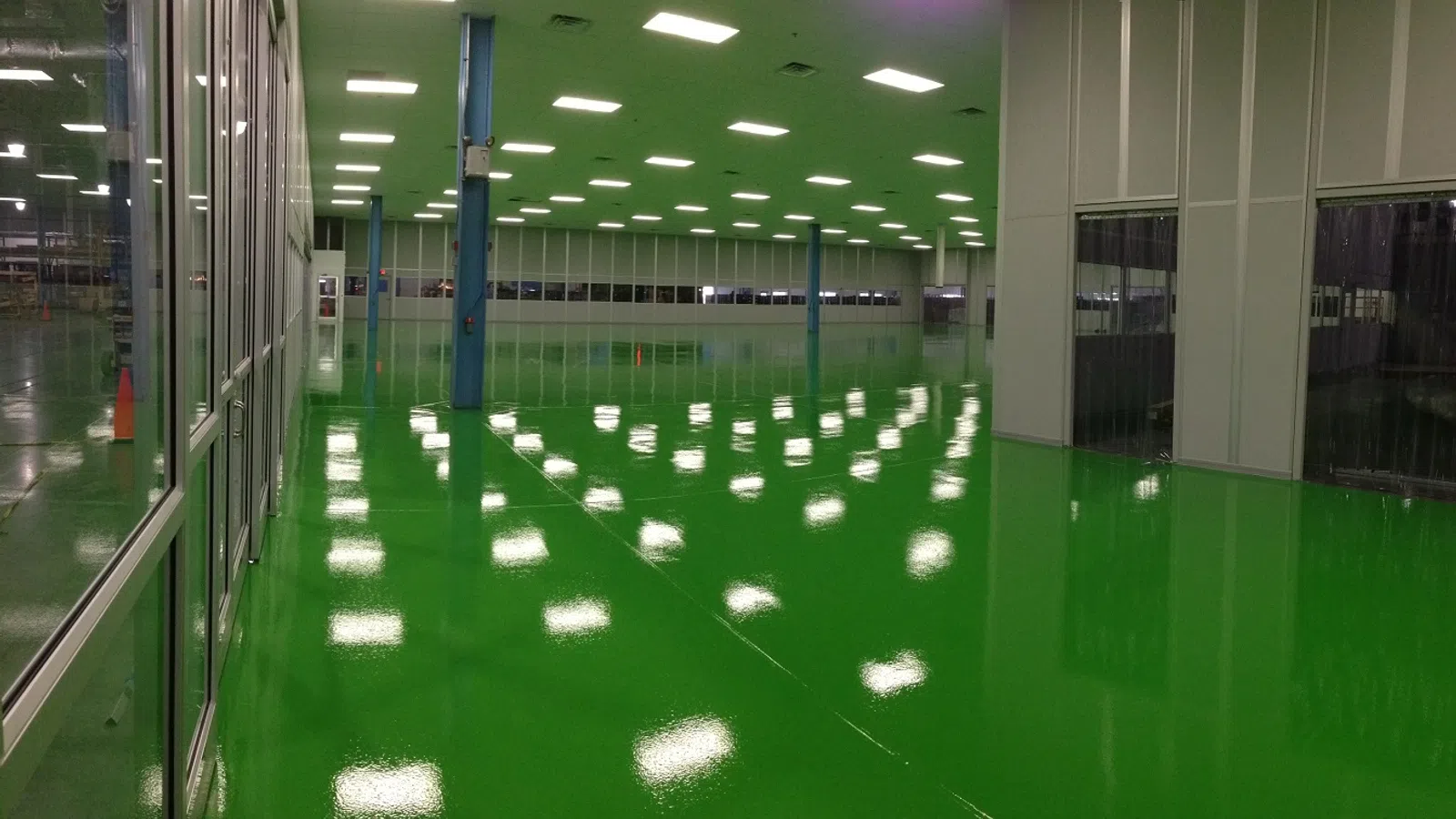
Industrial & Commercial Epoxy Flooring
Floors for Forklifts and Chemicals.
Ready for a New Floor?
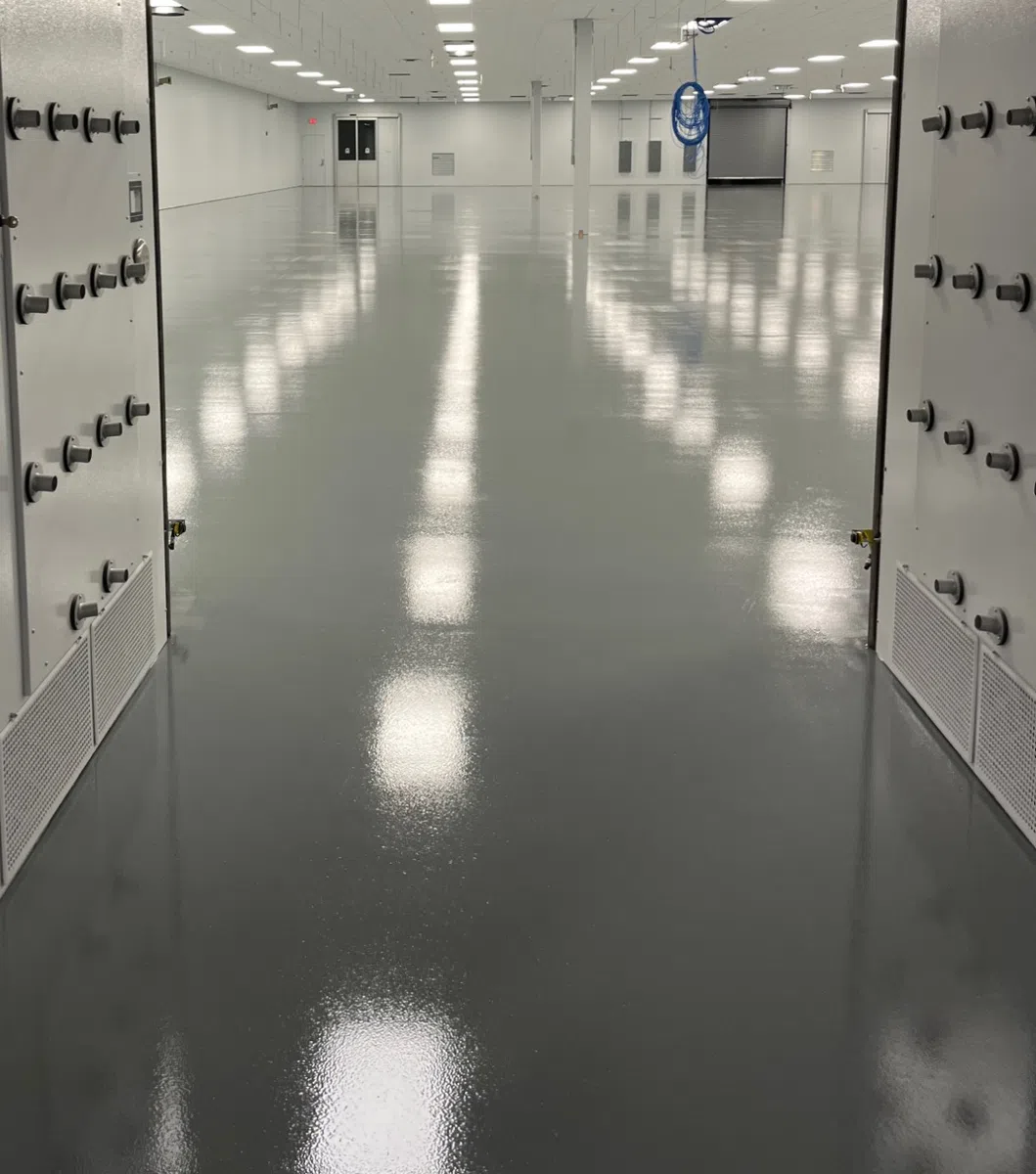
What Industrial Epoxy Flooring Is
In 30 Seconds
Industrial epoxy flooring is a resinous coating system applied over prepared concrete to create a seamless, non-porous surface. It is built in layers, including surface preparation, primer, body coats, and topcoat, with each layer selected for what the floor has to survive.
Bare concrete dusts as it wears, which matters wherever airborne particles affect product. It absorbs oil, coolant, and chemicals that stain it permanently and create a slip hazard, and it cannot be properly sanitized because a porous surface traps what it should release. A coated floor addresses all three problems, and in a controlled environment it is usually a requirement rather than an upgrade.
- What it is. A resinous coating applied over prepared concrete that creates a seamless, chemically resistant, cleanable surface.
- Why industrial floors get coated. Bare concrete dusts, absorbs oil and chemicals, and cannot be sanitized. A coated floor solves all three.
- What decides the system. What is driving on it, what is spilling on it, and how it gets cleaned. Not the square footage.
- Where it fits our work. Coated floors go in with clean rooms, modular offices, and equipment installs as part of one contract.
Where Coated Floors Go In
Where It's Used
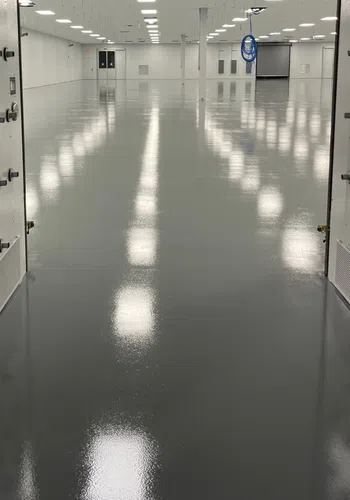
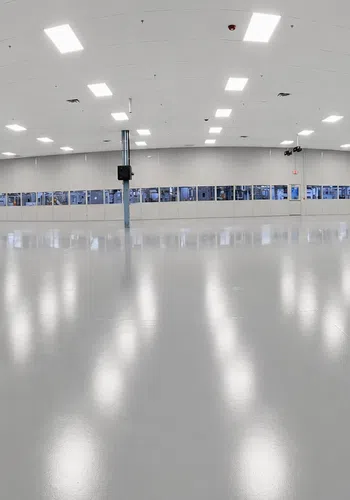
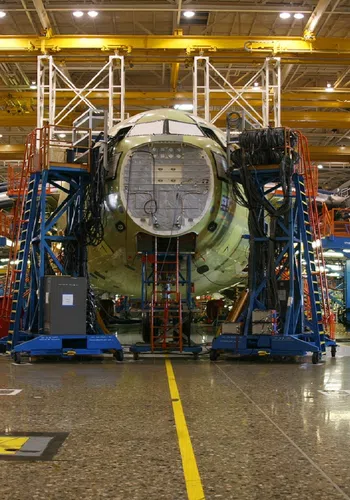
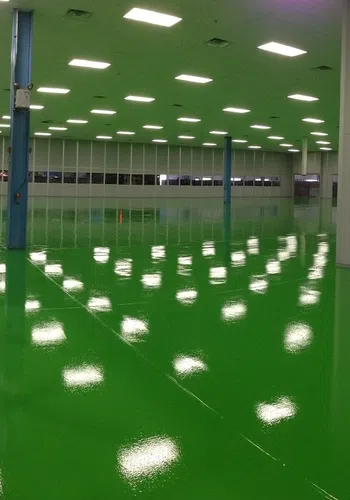
Coated Floors as Part of a Larger Project
Full-Project Sequencing
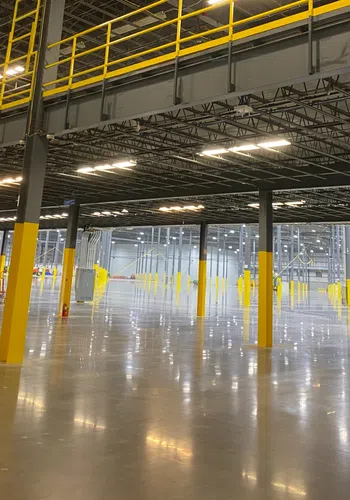
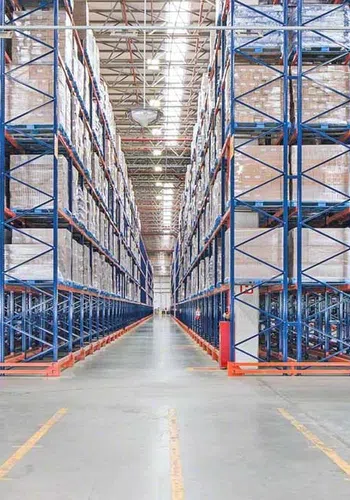
A coated floor rarely arrives alone. It goes in with a clean room, under a new mezzanine, around a machine install, or as the last step of a modular office build. All of those have a sequence, and floors are almost always on the critical path - coated too early and the crews damage it, too late and the equipment cannot be set.
Because we run the whole project, the floor gets scheduled where it belongs rather than squeezed in by whoever's available
Frequently Asked Questions
Common Questions
How much does industrial epoxy flooring cost?
Cost is driven by system type, thickness, the condition of the existing concrete, and how much surface preparation it needs. Prep is the variable that moves the number most - a sound slab and a slab with existing coating, oil contamination, or spalling are very different jobs at the same square footage
How long does an epoxy floor last?
In an industrial environment, service life depends far more on the system selected and the traffic it takes than on the product name. A correctly specified floor under known traffic lasts years; an under-specified one fails at the traffic lanes first, usually within the first year.
Can you coat over an existing epoxy floor?
Sometimes, if the existing coating is sound and compatible. More often the right answer is mechanical removal, because a new system bonded to a failing one fails with it. We assess the existing floor before quoting rather than after.
How long before we can use the floor?
Cure and return-to-service times vary by system, ambient temperature, and thickness. Some systems allow foot traffic within hours and full service in 24 hours; others need several days. If you have a fixed shutdown window, tell us up front - it narrows the system selection immediately.
Do you do cleanroom flooring?
Yes, as part of modular clean room projects. Cleanroom floors are seamless and coved up the wall so there is no joint at the floor-wall junction to hold contamination, and the finish is selected for the disinfectants your protocol calls for.
What about washdown and food processing areas?
Those usually call for urethane cement rather than standard epoxy, because thermal shock from hot washdown will delaminate a system that is not built for it. Tell us the wash temperature and frequency during design.
Send Us the Square Footage and the Exposure
Start a project
Area, what drives on it, what spills on it, how it gets cleaned, and what shutdown window you have.